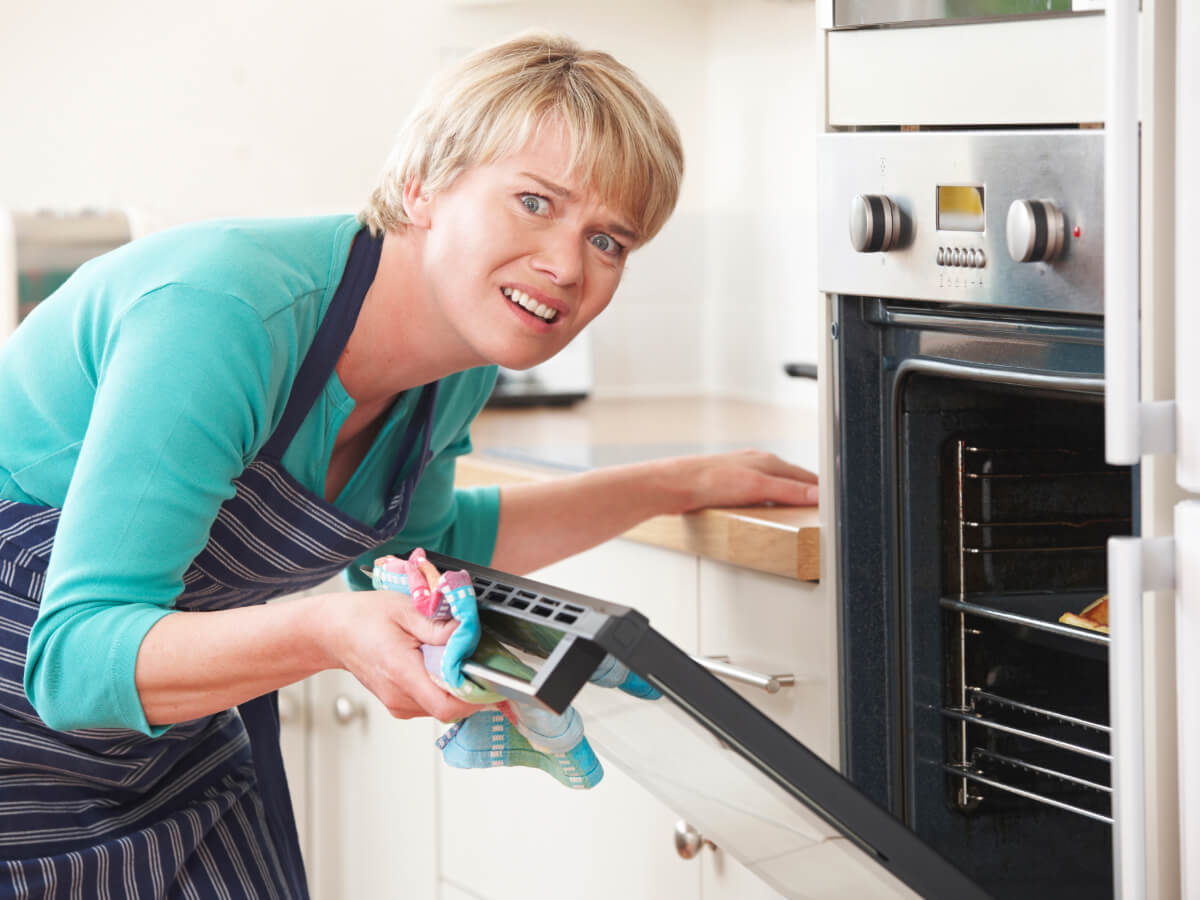
Tired of Half-Baked Results? Here’s Why Your Oven Cooks Unevenly
You did everything right. You preheated. You measured. You followed the recipe as if it were legally binding. Yet somehow, dinner still comes out wrong. Between inconsistent heat, long preheat times, and meals that never quite turn out the way you’d like them to, uneven oven cooking can make everyday dinners a guessing game.
In this article, we’ll break down why uneven cooking happens, what’s considered normal, and when it may to consider a replacement for your current oven.
Uneven Oven Cooking: What It Looks Like at Home
If your oven cooks unevenly, you may notice that food browns too quickly on one side and remains undercooked on the other. Maybe your baked goods never cook all the way through, or your oven isn’t heating to the desired temperature, even though the display says it’s ready.
When an oven is not heating to temperature completely, these frustrating, real-life issues may show up meal after meal.
- Hot spots in cooked food
- Inconsistent baking
- Consistently needing to rotate pans just to get acceptable results
- Long preheat times, or an oven that claims it’s preheated but doesn’t seem hot enough
- Meals that take much longer than recipes suggest or never reach the expected internal temperature
These little frustrations can stack up. Before long, they can turn into wasted food, delayed dinners, and less confidence every time you turn on your oven.
Why Is My Oven Cooking Unevenly?
An oven’s job is simple: reach a set temperature and maintain it evenly throughout the cooking space. In reality, that’s harder than it sounds, especially as ovens age. When any part of your oven’s heating, sensing, or airflow system falls out of balance, whether you have an electric or gas range, uneven cooking issues can appear.
Here are the most common reasons an oven cooks unevenly or becomes unreliable over time.
Uneven Heat Distribution Inside the Oven
Ovens are designed to circulate heat throughout the cooking cavity, but that circulation isn’t always perfectly balanced, especially as appliances age. When heat no longer moves evenly, certain areas of the oven can run hotter or cooler than others. This often manifests as food browning faster on one side of the pan, cooking more aggressively toward the back of the oven, or behaving differently depending on its placement.
In convection ovens, this issue can also be attributed to problems with the convection fan or airflow path. If heat isn’t being actively moved throughout the cavity, even a properly heated oven can still cook unevenly. Slight variations are normal, but when these patterns repeat consistently, it’s a sign the oven’s heat distribution system is no longer working as intended.
Temperature Sensor or Thermostat Inaccuracy
If your oven appears to be set correctly but the results don’t match, temperature accuracy may be part of the problem. Modern ovens rely on sensors and thermostats to determine when to cycle heat on and off. Over time, those components can lose precision or fall out of calibration. When that happens, the oven may believe it has reached the selected temperature before it actually has, or it may struggle to maintain steady heat once cooking begins. This is one of the most common reasons people experience an oven not heating to the desired temperature, even though everything appears to be functioning properly on the surface.
In many cases, the issue isn’t total component failure, but miscalibration or inconsistent temperature feedback that causes the oven to regulate heat incorrectly.
Heating Component Wear in Electric Ovens
Electric ovens rely on bake and broil elements to produce and maintain consistent heat. As those elements wear out over time, they may still turn on, but no longer distribute heat evenly across the oven cavity.
This often leads to uneven browning, longer cooking times, and inconsistent results from one meal to the next. The oven technically works, but the heat output is no longer strong or balanced enough to support reliable baking.
Gas Oven Heat Imbalance
If you’ve ever wondered, “Why does my gas oven cook unevenly?” you’re not alone. Gas ovens heat differently than electric models, and while they’re excellent at producing strong heat, they can be more prone to uneven temperature zones as they age.
In a gas oven, heat is typically generated by a bottom burner and regulated by igniters, valves, and sensors. If any of those components begin to weaken, heat may cycle inconsistently or distribute unevenly. Even when the oven lights and appears to function normally, subtle ignition or burner issues can cause temperature swings that affect cooking results.
Because gas ovens rely heavily on airflow and rising heat, they’re especially sensitive to disruptions in circulation, making hot spots more noticeable over time.
Door Seal Wear, Insulation Breakdown, and Heat Loss
Ovens are built to hold heat just as much as they are to generate it. When door seals wear out or internal insulation begins to degrade, heat can escape more easily. This makes it harder for the oven to maintain a stable internal temperature.
In this situation, the oven may still heat up, but it loses heat faster than it should. Over time, this loss of heat retention can significantly impact performance, even if other components are still functioning properly.
Preheating and Temperature Recovery Issues
Preheating sets the foundation for even cooking. When an oven takes longer to preheat than it used to, or struggles to recover heat after the door is opened, cooking results often suffer. Heat may never fully stabilize, resulting in undercooked centers, uneven browning, and longer-than-expected baking times.
Common underlying causes of this issue include:
- Aging heating components that no longer produce heat as efficiently
- A temperature sensor or thermostat that misreads internal heat and signals readiness too early
- Declining heat retention due to worn insulation or door seals allowing heat to escape more quickly, making it harder for the oven to maintain a steady temperature.
- Design or airflow limitations, especially in older models that lack modern heat circulation systems
Control Board or Electrical Regulation Problems
In newer ovens, uneven cooking can sometimes be traced back to the electronic control board. This component manages how and when heat is delivered throughout the cooking cycle. If the control board begins to fail or deliver inconsistent signals, heating elements or burners may cycle improperly even if they’re still physically intact. This type of issue can cause unpredictable temperature swings, inconsistent preheating behavior, or ovens that behave differently from one cooking session to the next.
Blocked Airflow and Poor Oven Circulation
In any oven, airflow is crucial for proper function. Crowded oven racks, blocked vents, or foil placed inside the oven cavity can impede the movement of hot air around your food, potentially affecting its cooking ability.
Gas ovens rely especially heavily on airflow to distribute heat evenly, while electric ovens depend on clear circulation paths to balance heat from multiple elements. Frequent door opening also allows heat to escape, making it harder for the oven to maintain consistent temperatures—particularly if recovery is already slow.
While these factors don’t always indicate a broken oven, they can amplify existing performance issues and make uneven cooking more noticeable.
What’s Normal vs. What Signals a Real Problem?
Small differences in oven heat are common, especially when cooking large meals or using multiple oven racks. For example, occasional uneven browning doesn’t necessarily mean something is wrong, and most ovens aren’t designed to be perfectly uniform in all corners. However, there are some telltale signs to look for when deciding which issues are more concerning.
More normal:
- Slightly different browning between racks
- Small hot spots that don’t ruin meals
- Occasional unevenness with very full loads
More concerning:
- The same side always overcooks
- The oven frequently seems cooler (or hotter) than the setting
- Uneven cooking is getting worse over time
- You’re regularly dealing with long preheats + inconsistent results
When It Might Be Time to Move On from Your Current Oven
If uneven cooking is frequent, worsening, or accompanied by persistent temperature issues, it may be time to consider options beyond quick fixes. Your oven may simply be reaching the end of its lifespan. Newer ranges are continually advancing with the goal of managing oven heat more evenly, circulating hot air more effectively, and cooking food with greater consistency.
However, replacing a major appliance can feel overwhelming, especially when it’s unexpected. That’s where options like rent-to-own can offer meaningful relief, making it possible to move toward a more dependable oven without needing everything figured out upfront.
At Rent-A-Center, you can choose a quality range that fits your space and your life, while working toward ownership through renting at a pace that feels manageable. After all, preparing meals shouldn’t feel like a science experiment, and your dinner should never be the wildcard.
Ready to Think Beyond Half-Baked Results? Shop Rent-to-Own
When you rely on your oven for everyday meals, consistency is essential. Many households find that rent-to-own really makes sense when replacing big-ticket items like appliances. Fortunately, Rent-A-Center offers a way to take home a dependable range now and work toward owning it at a pace that makes sense for your household.
Explore rent-to-own ovens and ranges, along with other kitchen appliances, online or at your local Rent-A-Center today.