


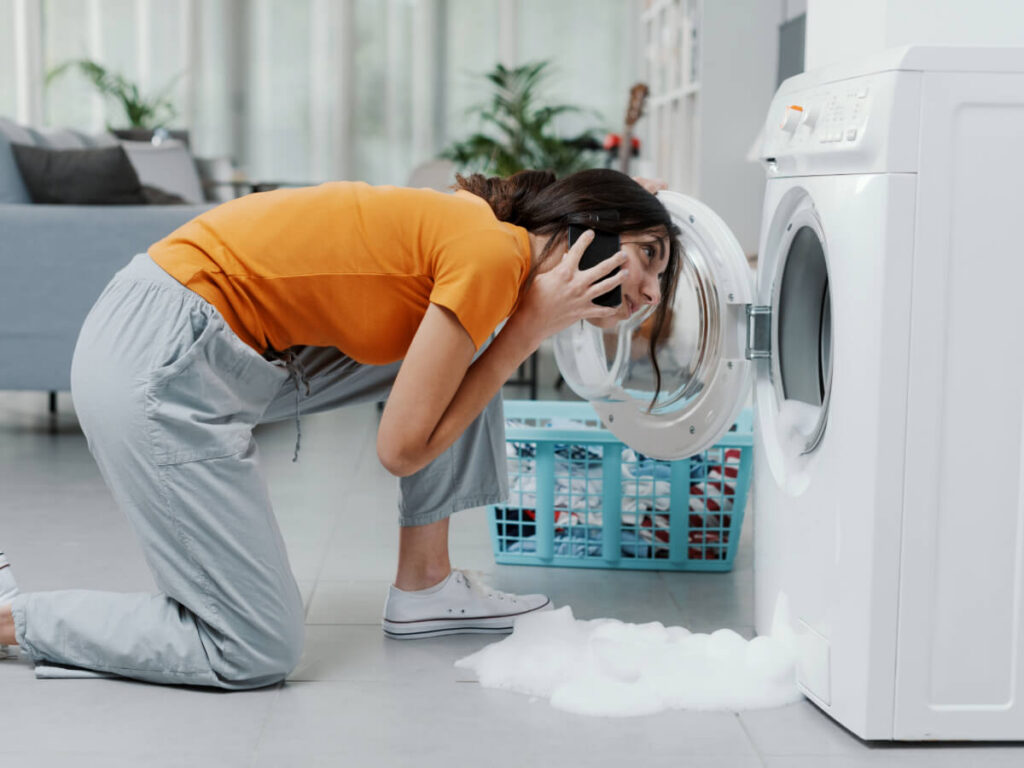
Every washer has a soundtrack. Water rushing in, the steady swish of the wash cycle, a gentle hum as the drum turns, and on some models, a cheerful chime or melody when the load is done. But when a sound you didn’t expect joins the mix, it is hard not to worry.
Learning to identify between different washing machine noises can save you from two separate headaches: ignoring a serious problem or stressing over a completely harmless sound. Here is a simple guide to what each noise may mean, how serious it could be, and what to do when your washer sounds like it is on its last spin.
Typical Washer Noises
Not every noise is a red flag. If your washing machine is making a humming noise during the wash cycle, it is usually just the motor doing its job, especially on models with an agitator that pulses back and forth. Soft clicks at the start of a cycle are often the lid or door lock engaging, and a gurgle near the end is typically the pump draining the last of the water.
The noises worth paying attention to are the ones that are new, louder than usual, or getting worse with every load.
Washing Machine Noises at a Glance
Noise |
Most Common Causes |
Severity |
|---|---|---|
| Humming | The motor is running normally during the wash cycle. | Normal |
| Clicking | The door lock is engaging, or small items are caught in the drum or drain pump. | Low to moderate |
| Buzzing | The drain pump is obstructed or wearing out. | Moderate |
| Banging | The load is unbalanced, or the drum has come loose. | Moderate, high if it continues with balanced loads |
| Knocking | Hoses are bumping the cabinet, or suspension parts and shock absorbers are worn. | Moderate to high |
| Screeching | The drive belt, motor coupling, or bearings are worn. | High |
| Grinding | The drum bearings are failing, or an object is trapped between the drum and tub. | High |
Grinding and Screeching Sounds
A grinding noise is one sound you never want to brush off. Grinding often points to worn drum bearings or a small object trapped between the drum and the tub. Bearings keep the drum spinning smoothly, so once they wear down, the problem tends to grow louder and more expensive with every load.
Screeching is grinding’s louder, more dramatic cousin. If your washing machine is making a screeching noise, a worn drive belt, a slipping motor coupling, or failing bearings could be to blame. A squeal that appears during the spin cycle and persists is a classic sign of wear and a good reason to consider replacing your washer.
Clicking and Buzzing Sounds
When your washing machine is making a clicking noise beyond startup, the usual suspects are small items like coins, buttons, bra underwires, and loose zippers rattling around the drum or lodged in the drain pump. A quick pocket check before every load can spare your washer a lot of wear.
Buzzing sounds deserve a closer listen. If you notice your washing machine making buzzing noises while the water drains, the drain pump may be obstructed or wearing out. A struggling pump can also leave water sitting in the drum.
Banging and Knocking Sounds
If your washing machine is making a banging noise, your load may be unbalanced. Bulky items like comforters can bunch up on one side of the drum, throwing the whole machine off balance. This kind of banging typically stops once the load is redistributed, but repeated episodes can strain the machine over time.
Now, if your washing machine is making a knocking noise even when the load is balanced, worn suspension parts may be the cause. On a front-load washer, each shock absorber helps steady the drum through high-speed spins, and once those parts wear out, the drum can hit the cabinet on every cycle. A washer that knocks and shakes its way across the floor may indicate that its support system is wearing thin.
Ready for Laundry Days You Can Count On?
A loud noise in the laundry room is more than an annoyance. A washer on the decline can stretch one load into an afternoon and leave you wondering whether the next cycle will be its last. Worn parts can also be rough on your wardrobe, since aging drums are a common reason for holes and snags in your clothes.
Many washers last around ten years. If yours is getting close to that mark and the noises keep coming, paying for repair after repair may not add up — especially when a new washer or complete laundry setup could be more affordable than you think. Explore rent-to-own washers and washer-dryer sets online or visit your nearest Rent-A-Center today.
And if you’re not sure which model fits your household, our washing machine capacity guide can help you choose with confidence.