


For many, laundry day is a well-established routine that includes either dryer sheets or a dryer ball — but do you actually know how they work, and why you started opting for one over the other?
Though the two serve a similar purpose, the debate over dryer balls vs sheets has become increasingly common in the laundry room. By comparing the two, you’ll have a better idea of which option works best for your household.
How Do Dryer Balls and Dryer Sheets Work?
While both dryer balls and dryer sheets are used during the process of drying your clothes, they’re not interchangeable. While some of their uses and benefits overlap, they also each have unique selling points.
Ultimately, though, dryer balls work mechanically, while dryer sheets work chemically. They purport similar benefits, but through very different methods.
What Are Dryer Balls?
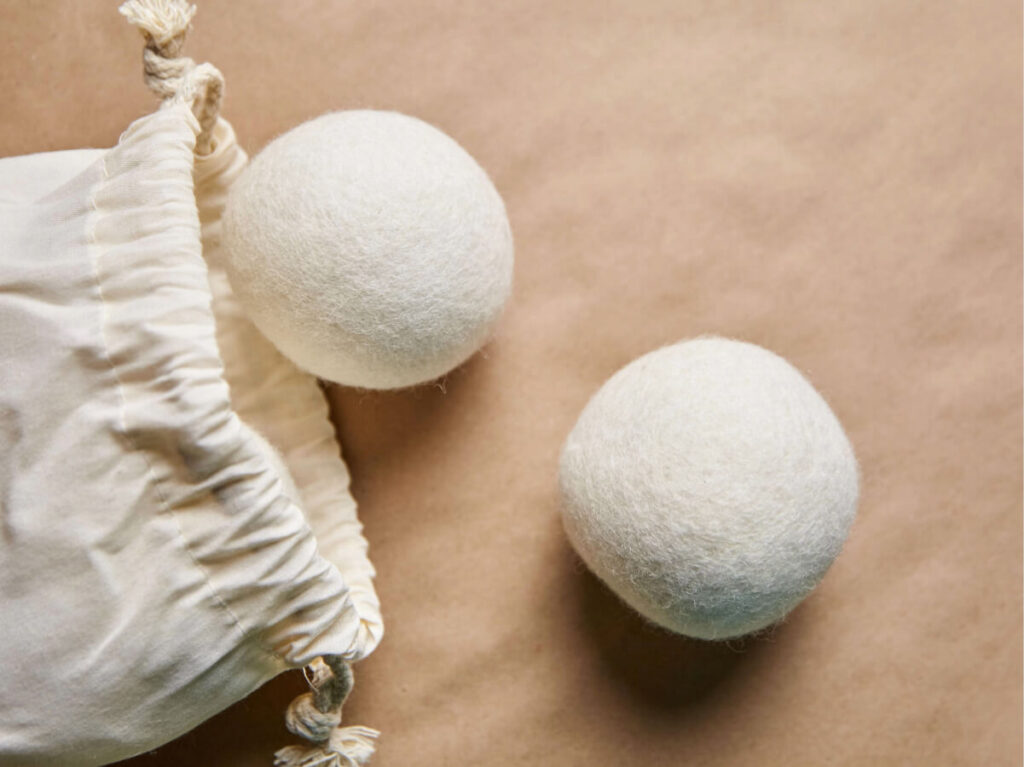
Dryer balls are tennis ball-sized balls that you toss into your dryer with your clothing. They are often reusable and can be made of a few different materials, with the most common being wool and rubber.
If you’ve ever opened the dryer only to discover that your clothing was twisted and stretched into a massive knot of fabric, dryer balls can help prevent this problem. They tumble around with your clothing, separating items and keeping them from clumping together. Dryer balls’ effectiveness is often most noticeable when washing things that are more prone to twisting and tangling, like bedding and towels.
In addition to keeping your laundry from turning into a big knot, these balls also improve overall airflow between items, typically cutting down overall drying time. Finally, they help to soften your clothing, reduce static, and prevent wrinkles as they bump and rub the fabrics.
What Are Dryer Sheets?
Dryer sheets, on the other hand, are single-use sheets that you add to drying cycles. They are thin – almost fabric-like – with a waxy coating made of additives like fabric softener, scents, and anti-static lubricants. When these sheets heat up with your clothing, their coating softens and melts, transferring these softeners and other additives directly to your laundry. These sheets are formulated to reduce static cling, soften fabrics, and add a nice scent to your freshly washed clothing.
Dryer Balls vs Dryer Sheets Pros and Cons
So, you know they perform differently, but which one performs better? There are plenty of benefits of dryer balls, and similarly, many benefits of dryer sheets. Here’s how they measure up against one another.
Static Reduction
Dryer balls can help reduce static by improving airflow and preventing clothes from clumping together as they tumble. They may also help clothes dry faster, which matters because overdrying can contribute to static. However, if static cling is your biggest laundry concern, dryer balls may not provide as much relief as dryer sheets.
In general, dryer sheets do a better job of eliminating static cling. Their anti-static ingredients transfer to clothing during the drying cycle, helping combat those annoying electric zaps (aka static cling). The tradeoff is that the coating left behind by dryer sheets can accumulate on some fabrics and dryer components over time.
Softness
Dryer balls create more natural softness over time by agitating the fibers. The result can feel more natural, although you may not get quite the same silky finish associated with dryer sheets.
Dryer sheets, on the other hand, gently coat clothing in a chemical softener that can make clothing feel soft and silky (and smell fresher). However, this softener can cause residue to build up on clothing over time, and some people prefer the more natural effect of the dryer balls.
Another perk of both dryer sheets and dryer balls is their ability to loosen fabrics, release pet hair, and help guide it into the lint trap – a huge perk if you live with furry friends.
Drying Time
Dryer balls can make a significant impact on overall drying time by improving the airflow throughout your dryer and helping items dry evenly and thoroughly. Wool dryer balls are even moisture-wicking, so they absorb water from your clothing as they bounce around.
Dryer sheets, however, do not reduce drying times. In fact, if dryer sheet residue builds up on the components of your dryer, it can even inhibit airflow and make this process take longer.
Fragrance
Many dryer balls don’t provide the same built-in fragrance options as dryer sheets. While some people choose to add essential oils and other scents to their dryer balls, doing so isn’t always recommended, as oils can potentially transfer to fabrics and aren’t necessarily appropriate for use in the dryer. However, if you have sensitive skin, forgoing fragrance altogether is often the safer choice.
Dryer sheets are the stronger option if fragrance is high on your wish list. Available in scents like lavender, citrus, jasmine, and vanilla, dryer sheets infuse these scents into your clothing as the coating melts during the dry cycle.
Reusability
Dryer balls are typically more eco-conscious and reusable. You can invest in a collection of balls and use the same ones for many loads. So, are dryer balls worth it? While the initial cost of a set of dryer balls may feel a bit pricey, you won’t need to buy them again for a long time.
Dryer sheets, however, are single-use, made of synthetic materials, and are generally not considered to be an eco-friendly option.
Convenience
Dryer sheets are readily available at grocery stores; you can store them with your detergent, and they can be a relative “no-brainer” part of your laundry routine.
Dryer balls, on the other hand, can be reused over and over again, meaning you don’t need to think about restocking. You just need to store them somewhere convenient.
Are Dryer Balls Better Than Dryer Sheets?
“Better” is subjective, and the answer to this depends on your personal laundry goals and preferences. If your priorities are natural softness, sustainability, and decreased drying time, you may be more satisfied by using dryer balls. If your priorities are fragrance and eliminating any static electricity, you may prefer dryer sheets.
Some people even choose to use both dryer balls and dryer sheets in their laundry routine. If you can’t decide which you prefer – or you feel dissatisfied when using only one – this may be worth a try!
Sometimes skipping the dryer altogether is what your clothing calls for. Learn about the pros and cons of air-drying here.
Optimizing Your Laundry Day Routine
Selecting the best products for laundry day can make a major difference in the results you achieve. For instance, not all types of clothing or loads of laundry require the same approach. For example, dryer sheets are not advised to be used with anything that is flame-resistant or moisture-wicking, as the waxy coating can interfere with the fabric’s specialized properties. You’ll also want to skip the sheets if you’re drying microfiber towels, as the residue can clog the tiny fibers that make them effective.
As always, it’s important to read the care tags of all items to ensure you’re washing them correctly.
Laundry is full of little decisions, and finding the right routine can make a surprising difference in how clothes look, feel, and dry. Whether you’re experimenting with dryer balls, sticking with dryer sheets, or simply trying to make laundry day more efficient, having a dependable dryer is the foundation of it all. With Rent-A-Center’s rent-to-own washers and dryers, you can create a laundry setup that works for your household and your routine. Browse online or visit your local Rent-A-Center to explore your options today.
Dryer Ball vs. Dryer Sheets FAQs
Are Dryer Balls Bad For Your Dryer?
While harder plastic and rubber dryer balls can create small dents or scuffs within your dryer over time, this is uncommon. Wool balls, or less dense rubber or plastic balls, are generally safe for modern electric dryers.
Do Dryer Balls Work?
Yes, dryer balls can help separate clothing as it tumbles, improving airflow between items. This can help laundry dry more evenly and may shorten drying time. Their tumbling action can also help soften fabrics and reduce wrinkles and static, although results can vary based on the size and type of load.
Do Dryer Balls Help with Static?
While dryer balls can effectively reduce static by improving airflow and decreasing overall dry time, they’re typically no match for the static-busting chemicals in dryer sheets.