


The EnergyGuide and ENERGY STAR labels are often confused, but they give shoppers very different information. Here’s the difference between the two, how to read them, and how to use these labels to your advantage as you shop.
Understanding the EnergyGuide Label vs. ENERGY STAR Certification
While the EnergyGuide label and the ENERGY STAR Certification label often appear side-by-side on appliances, they do not mean the same thing and are certainly not interchangeable. One serves as a power-consumption label, while the other identifies products that meet rigorous energy-consumption standards.
In short:
- EnergyGuide helps you compare estimated energy use and operating costs.
- ENERGY STAR identifies products that exceed efficiency standards.
EnergyGuide Label
An EnergyGuide Label is the bright yellow label you’ll see on many big home appliances as you shop. This handy appliance energy guide, mandated by the Federal Trade Commission (FTC), estimates how much energy the appliance uses each year and provides an estimated annual operating cost based on national average utility rates. In other words, EnergyGuide Labels help shoppers compare similar models with similar capacities side by side and make informed decisions about how much an appliance will cost over time.
ENERGY STAR Certified Label
The blue ENERGY STAR Certified label is a voluntary certification administered by the U.S. Environmental Protection Agency (EPA), and it is awarded to appliances that meet strict energy-efficiency standards. If you see this on an appliance, that means it was independently tested and verified to use less energy.
Additionally, choosing appliances with an ENERGY STAR label may offer benefits like:
- Lower monthly utility bills
- Reduced electricity use
- Less water consumption for qualifying appliances
- Long-term savings throughout the appliance’s lifespan
While some ENERGY STAR label appliances may have a higher upfront price than a comparable model, the lower operating costs may help offset that difference over time.
How to Read an EnergyGuide Label
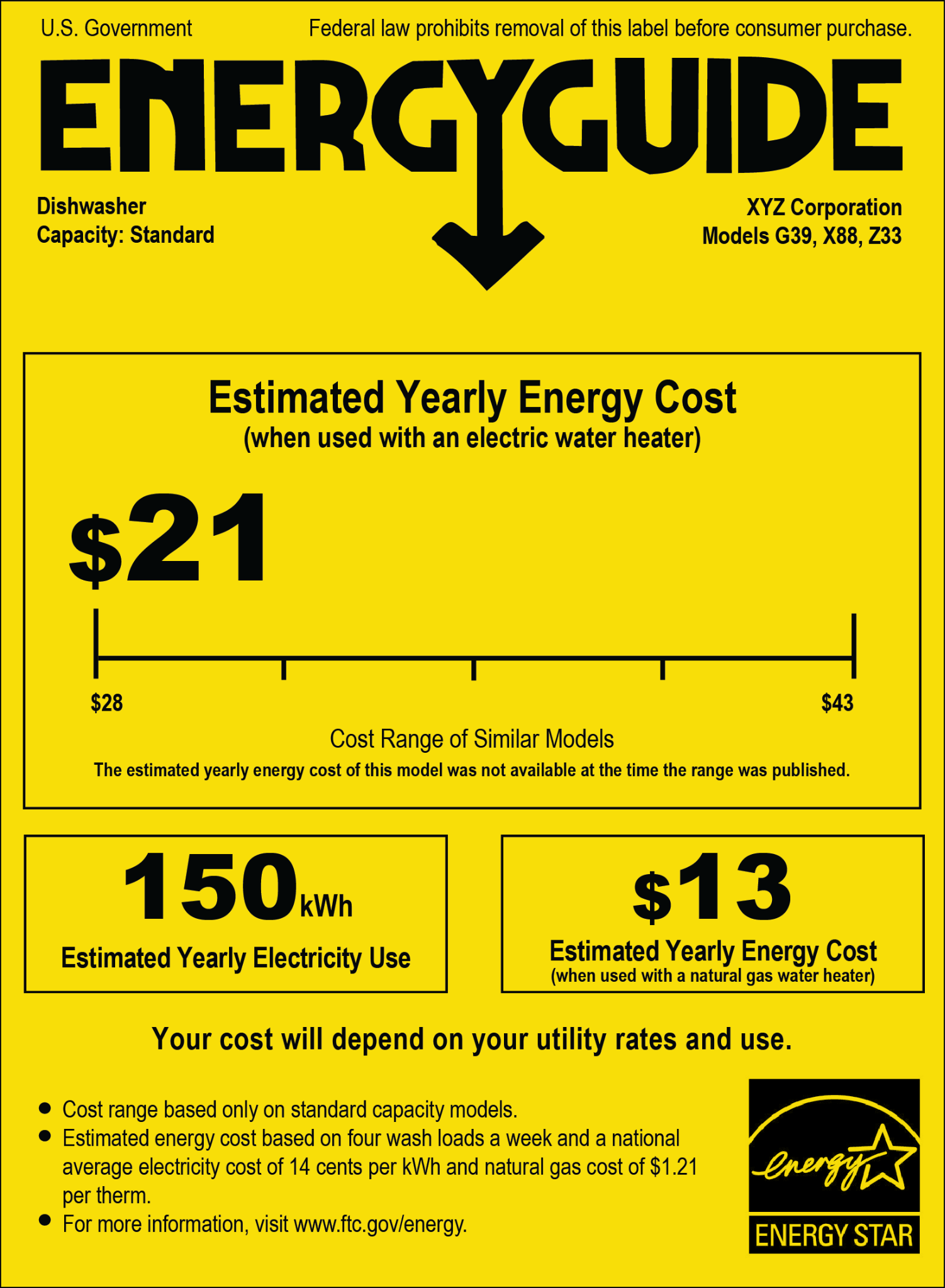
The power consumption label on an appliance contains more useful information than you might initially realize. Taking a few moments to review it can make comparing models much easier.
When looking at an EnergyGuide label, pay attention to:
- Estimated annual energy use. This tells you how much electricity the appliance is expected to use in a typical year, usually measured in kilowatt-hours (kWh).
- Estimated yearly operating cost. Based on average national electricity prices, this estimate gives you a general idea of what the appliance may cost to run each year. Your actual costs will depend on local utility rates and how often you use it.
- Energy-use comparison scale. This scale shows where the appliance falls compared to similar models, making it easy to see whether it uses more or less energy than others in the same category.
- Model information. The label identifies the specific appliance tested, helping you compare the exact models you’re considering. For example, if you’re deciding between two refrigerators with similar features, the refrigerator energy guide can quickly show which one is expected to use less electricity over the course of a year.
However, you’ll want to keep in mind that these numbers are only estimates, which the FTC states are “based on typical use and a national average price for energy.”
What Energy Labels Mean for Different Appliances
Not every appliance uses energy or water in the same way, so there isn’t a one-size-fits-all approach to shopping efficiently. As you compare your options, EnergyGuide and ENERGY STAR labels can help you understand where you may save on electricity or water over the life of the appliance.
Refrigerators
Your refrigerator works around the clock, every day of the year. Because it never really gets a break, even small improvements in efficiency can add up. When comparing models, the refrigerator energy guide helps you estimate how much electricity each refrigerator is expected to use annually. If you also see the ENERGY STAR label, you’ll know the refrigerator meets higher efficiency standards established by the EPA.
Dishwashers
Today’s ENERGY STAR-certified dishwashers are designed to clean effectively while using less water and energy than standard models. Many include sensors that adjust water usage based on load size, along with more efficient wash and drying systems. Over time, those improvements can help reduce both water and electricity costs.
Washers
Many ENERGY STAR-certified washers use advanced wash technology that cleans clothing with less water while removing more moisture during the spin cycle. That means your dryer has less work to do, which may reduce drying time and energy use.
Dryers
Dryers use a lot of energy, so efficiency is worth considering when it’s time for an upgrade. Some newer, high-efficiency dryers earn ENERGY STAR certification by incorporating features like heat pump technology — which recycles warm air instead of constantly generating new heat — and moisture sensors that automatically stop the cycle when clothes are dry. These features help reduce unnecessary energy use while still delivering dry, ready-to-wear clothes.
If you’re replacing both appliances, shopping for washer and dryer ENERGY STAR models can help improve the overall efficiency of your laundry routine while keeping operating costs in check.
Choose Appliances with Long-Term Value at Rent-A-Center
The price tag on an appliance is only part of the story. The energy and water it uses over the years can have a real impact on your household budget. Understanding EnergyGuide and ENERGY STAR can help you choose appliances that deliver value long after they come home. Whether you’re shopping for a refrigerator, dishwasher, washer, or dryer, Rent-A-Center offers rent-to-own appliances designed to support your home and your budget. Browse online or visit your local Rent-A-Center to explore your options today.